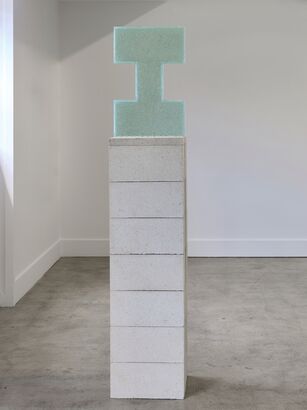
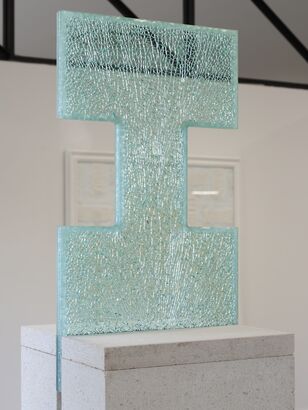
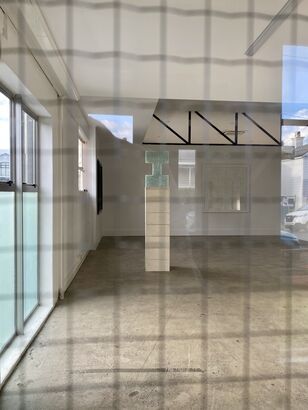
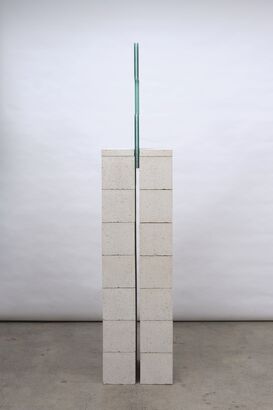
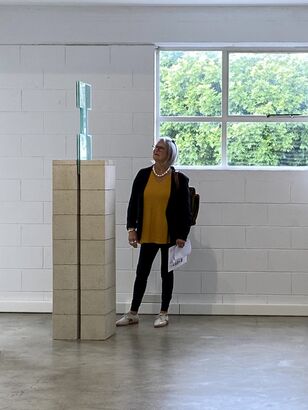
Hysteria is loaded with tension – a sign of the times. At head height, a smashed crystal-clear glass I reveals fractured nerves, its stem compressed between pillars of limestone. The I-head's fragile interior is encased in smooth planes, front and back, yet stays open and exposed at the edges. Rising from a void, the glass I is barely clasped between two stone towers, at once body and legs. Hysteria is broken but whole and grounded in the Earth.
Mediating between past and present, Hysteria recalls a cruel history and stands in dissent. It gives material form to the legacy of medical and social theories that measured women against prescribed ideals of femininity, with antecedents in ancient Egyptian and Greek texts. In Hippocrates medical writings, the uterus (hystera) was believed to move through the body; Plato's Timaeus defined it as restless when denied childbirth. In later centuries, the diagnosis of hysteria became a means of pathologising behaviours deemed unfeminine and unsuited to women – from free thought and resistance to marriage to the refusal of childbearing – legitimising treatments that confined women's bodies and minds.
In Hysteria, the self-declared sovereignty of the ‘I’ form turns both its polished exterior and shattered interior towards the light. The independent figure claims womb, body and mind as sites of agency rather than diagnosis, where fractures transform into sources of strength.